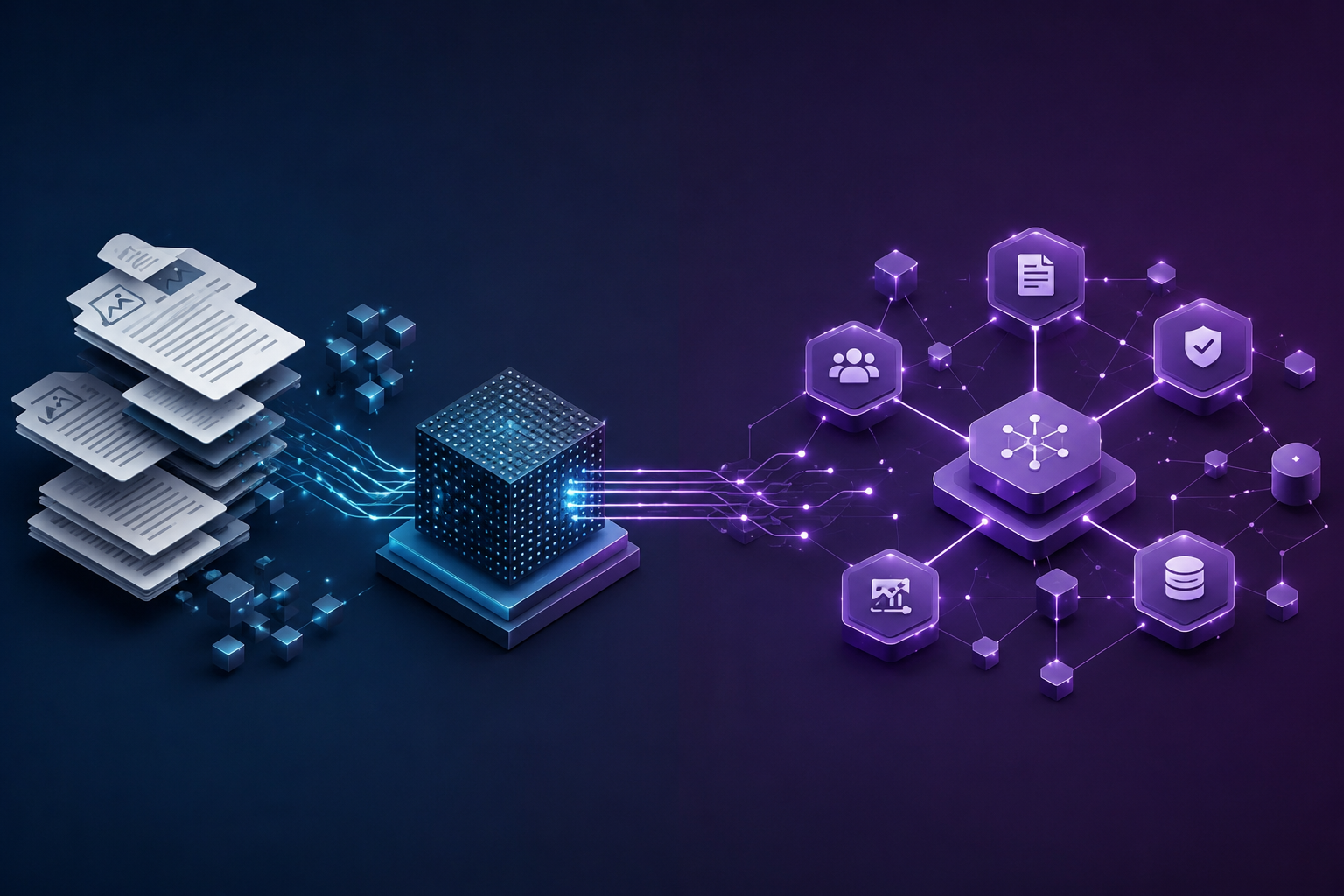
The evolution of software development: How artificial intelligence is disrupting the engineering workflow. Developers are already using AI for writing and fixing bugs, testing applications, automating the deployment of code at scale, and to design application architectures, although in the latter two areas, we've likely just scratched the surface.
According to Expert Market Research, the total software market globally was assessed as USD 719.09 billion in 2025 and is expected to grow by an average annual rate (CAGR) of 9.60 percent for the 2026-2035 timeframe to an impressive USD 1,798.41 billion by 2035. The growth is being fuelled by the rise of adoption of intelligent software applications, automation tools, and advanced artificial intelligence capabilities in the development landscape.
But for most teams and their engineers, the shift isn't merely about how much faster code they'll be able to produce. In its stead, the truly transformative aspect will be the formation of an AI-assisted development workflow in which engineers work hand in hand with smart systems from cradle to grave.
From Code Assistants to Agentic Software Engineering
Early AI coding assistants primarily excelled at code autocompletion and basic code generation. While effective for accelerating initial implementation, developers were still responsible for virtually every design and implementation decision. Then, we began to see the rise of agentic AI development — AI agents that act as autonomous software development assistants.
They understand the goals of a project, read a project's existing codebase, generate an implementation plan, write code, test it, and even provide suggestions for refactoring and optimization.
What's powerful is that an agentic AI works across all stages of software development. For example, you might say: "Add user authentication to our web application. I'm looking for an approach that will allow social login for Google, Facebook and GitHub users. It'll integrate into our current backend and front end".
An AI agent can then analyse your existing code, and propose an appropriate technical approach, generate the necessary code snippets, detect security issues, and provide recommendations for test coverage.
This kind of assistance shifts an engineer's attention from rote development tasks to higher-level architectural decision-making, problem-solving, and product strategic thought.
LLM-Assisted Debugging and Faster Problem Resolution
Debugging has traditionally been the bane of many engineers' lives. In large enterprise environments, there have been plenty of times that engineers have spent days sifting through countless log lines, following the path of an exception through complex services to figure out exactly what is going on.
LLMs are changing this with contextual debugging - modern AI-based debuggers can ingest error messages, analyse your codebase context, infer root causes and even provide concrete suggestions for how to resolve the problem. For example, rather than searching Stack Overflow and documentation for an error, engineers can input an error trace and get back an explanation and solutions, especially useful in sprawling systems with thousands of microservices.
But even with AI help, engineers need to be able to reason over what the tool recommends, understand the broader implications of the fix in the system, and confirm that it doesn't sacrifice security, performance or scalability.
AI-Powered Automated Testing Pipelines
Another arena where AI is making remarkable changes is that of software testing. In the present setup, teams are needed to develop the test case, script maintenance, and update the test framework every time software code changes and new versions of applications are developed.
AI-tested software can perform test case generation for software from application behaviour, user activities, or code updates, which greatly assists CI/CD operations.
Within modern CI/CD pipelines, AI can help by:
- Generating automated unit and integration tests
- Identifying high-risk code changes
- Predicting potential failures before deployment
- Prioritising test execution based on application impact
- Analysing production feedback to improve future testing
This allows development teams to maintain faster release cycles without compromising software reliability.
AI Integration into Modern CI/CD Workflows
Companies have started to adopt Continuous Integration and Continuous Delivery (CI/CD) in software product creation, which aims at scalable products. Artificial intelligence is adding new dimensions to the CI/CD pipeline and has brought about automated, predictive, and intuitive decision making.
With an AI-augmented CI/CD pipeline, we have intelligent systems that can analyse pull requests, spot coding errors, evaluate risk with security concerns, and identify opportunities to optimize, prior to the implementation of new changes into production.
For example, an AI tool used for reviewing code can point out an improper algorithm, an instance of code repetition, identify a threat, find coding errors or deviation from standards, hence decreasing the effort required by developers and freeing other team members for tasks like architectural reviews, where more logic is expected. AI, when trained on patterns of deployments and past performance, can also warn us of likely infrastructural issues.
The Changing Role of Software Developers
The rise of AI in software development does not eliminate the need for engineers. Instead, it changes the skills required to succeed in modern development environments.
Developers are increasingly becoming AI collaborators who manage intelligent tools rather than simply writing every line of code manually. Important skills for future engineers will include:
- Understanding AI-assisted development workflows
- Writing effective prompts for coding systems
- Reviewing and validating AI-generated code
- Designing scalable software architectures
- Managing security and compliance risks
The ability to combine traditional engineering knowledge with AI capabilities will become a major advantage for developers and technology teams.
Challenges of AI-Driven Software Development
Even though it does present benefits, there are some issues that businesses should take into consideration when implementing AI-driven development tools. The biggest concern will likely be over the quality of generated code. AI code looks fine but often includes back doors, inefficient solutions, or a general incompatibility with other systems. Human reviewers should be integrated into the coding process. The next important issue revolves around the privacy of your data.
When organisations are utilizing development tools run by AI, they will need to ensure their sensitive source code is kept safe. Furthermore, engineering teams should also work out where AI should be leveraged to make business-based decisions.
The Future of AI-Enhanced Engineering Workflows
Next-generation engineers and developers, working with sophisticated AI, will collaborate closely and in harmony. Developers won't be replaced. In essence, AI will serve as an extension of their engineering team, enabling faster development, higher quality outputs, and helping engineering teams overcome increasingly complex challenges.
In practice, the development workflow of the future will involve agents taking charge of the complete workflow — starting from analysing requirements and architecture, to test and deployment. Developers won't be writing all the parts manually anymore; rather, they'll be orchestrating intelligence. This approach requires developers to play a role in verifying that software products meet the objectives for the business and technology.
Any organisation developing and providing custom software, SaaS applications, and automation — and indeed any product powered by AI — can't afford to ignore these workflows in the future. Integrating this technology into the engineering workflow will enable better quality software to be delivered more rapidly while helping organisations maintain an extremely high level of development standards.