In many industries, employees are required to work alone, away from direct supervision or outside the immediate reach of their colleagues. Field engineers, construction workers, maintenance technicians, security personnel, utility workers, delivery teams, and facilities staff may spend significant portions of their working day without another employee nearby.
Lone working is not necessarily unsafe, but it can increase the potential impact of an incident. If a worker becomes injured, unwell, threatened, or unable to communicate, getting assistance may take longer. This is where technology can provide an additional layer of protection.
Cloud-based Software as a Service (SaaS) solutions are changing how organizations approach lone worker safety by making communication, monitoring, and emergency response more accessible.
Understanding the Challenges of Lone Working
Traditional workplace safety programs often focus on preventing accidents through training, personal protective equipment, risk assessments, and safe operating procedures. These measures remain essential, but lone workers face an additional challenge: there may be nobody nearby to recognize that something has gone wrong.
For example, a maintenance technician working alone at a remote facility may experience an accident and be unable to reach a supervisor by phone. Similarly, a field engineer working outside normal office hours may need immediate assistance without having colleagues nearby.
Organizations therefore need safety procedures that address not only prevention but also communication and response.
How SaaS Can Support Lone Worker Safety
SaaS platforms operate through cloud-based infrastructure, allowing authorized users to access software without maintaining complex on-site systems. For organizations with mobile or distributed employees, this model can make safety technology easier to deploy across multiple locations.
A modern lone worker safety platform can bring several capabilities together, including emergency alerts, worker check-ins, location information, and monitoring.
Instead of relying entirely on manual processes, organizations can establish automated workflows that help supervisors identify potential problems more quickly.
GPS Location Tracking
Location awareness can be particularly useful when employees work across large sites or unfamiliar areas.
GPS-enabled safety applications can provide authorized personnel with information about a worker's location when appropriate. If an employee activates an emergency alert, location information may help responders understand where assistance is needed.
Location technology should always be implemented with appropriate privacy and data protection policies. Employees should understand what information is collected, why it is collected, and who can access it.
SOS Emergency Alerts
During a serious incident, a worker may not have enough time to make a conventional phone call or explain the situation in detail.
An SOS feature can provide a simple method for requesting assistance. Depending on the organization's configuration, an alert can notify designated contacts or monitoring personnel who can then follow the company's emergency response procedure.
The technology itself is only one part of the process. Organizations should establish clear escalation procedures so that alerts are handled consistently.
Automated Check-Ins
Manual check-in procedures can be difficult to maintain when employees are working across multiple locations or during irregular shifts.
Automated check-ins can provide a more structured approach. A worker may be asked to confirm their status at predefined intervals. If the expected check-in does not occur, the system can notify an appropriate contact according to the organization's escalation policy.
This approach can help reduce reliance on supervisors remembering to manually contact every lone worker.
Real-Time Monitoring
Centralized monitoring can provide safety teams with greater visibility over employees who are working independently.
Instead of managing information through separate phone calls, messages, or spreadsheets, organizations can use a centralized platform to monitor relevant safety events and alerts.
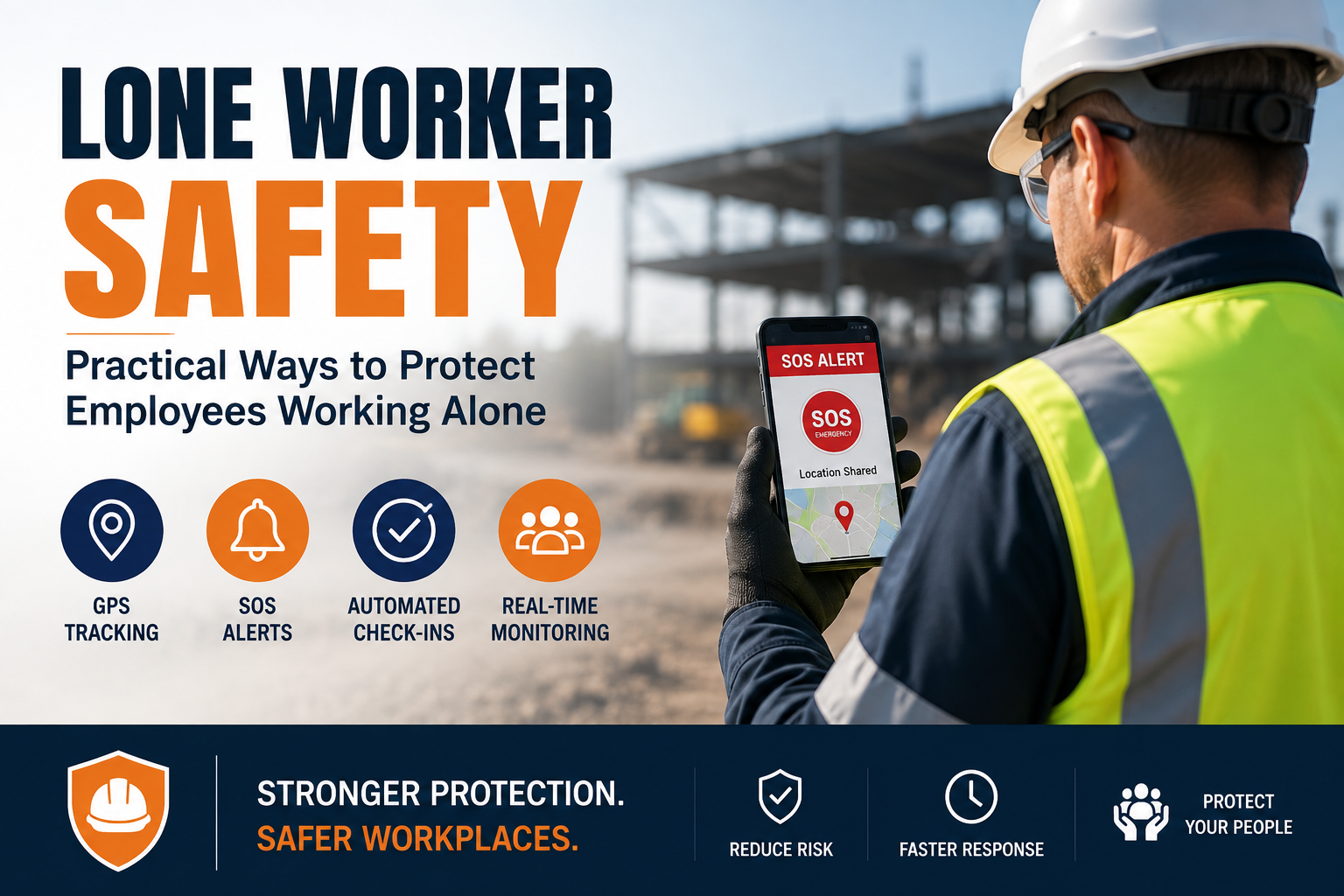
For example, lone worker safety platforms such as LWSTech combine capabilities such as GPS tracking, SOS alerts, automated check-ins, and real-time worker monitoring to support organizations managing lone workers.
The goal is not to monitor employees unnecessarily. Rather, technology should provide the right people with relevant safety information when it is needed.
Why Cloud-Based Solutions Are Useful for Distributed Teams
One of the advantages of SaaS is scalability. Organizations can potentially introduce a cloud-based safety solution across different teams and locations without deploying separate systems at every site.
This can be particularly useful for companies with:
Construction and engineering teams Field service employees Utility workers Logistics and transportation personnel Facilities management teams Remote maintenance workers Security personnel Employees working outside normal office hours
As organizations grow, centralized cloud platforms can also make it easier to maintain consistent safety procedures across different teams.
Technology Should Complement, Not Replace, Safety Procedures
Although technology can strengthen lone worker protection, it should not replace fundamental workplace safety practices.
Organizations should continue to conduct risk assessments, provide appropriate training and PPE, establish emergency procedures, and ensure workers understand how to respond to hazards.
Technology should function as another layer within a broader safety strategy.
Companies should also regularly test emergency alerts and check-in procedures to make sure employees know what to do when an incident occurs.
Creating a More Proactive Safety Culture
The future of workplace safety is increasingly focused on proactive risk management rather than simply responding after an incident.
SaaS technology can help organizations collect relevant safety information, improve communication, and establish structured emergency workflows. When combined with effective policies and employee training, these capabilities can contribute to a stronger safety culture.
For organizations managing employees who regularly work alone, the question is no longer simply whether they have a safety policy. It is whether their employees can quickly communicate a problem and whether the organization can respond effectively when assistance is needed.
Conclusion
Lone working is an important workplace safety consideration across many industries. While traditional safety practices remain essential, SaaS technology provides organizations with additional tools for communication, monitoring, and emergency response.
GPS tracking, SOS alerts, automated check-ins, and centralized monitoring can help organizations build more responsive lone worker safety programs.
As remote and mobile work continues to expand, businesses that combine technology with strong safety procedures will be better positioned to support employees working independently while maintaining a practical and scalable approach to workplace safety.