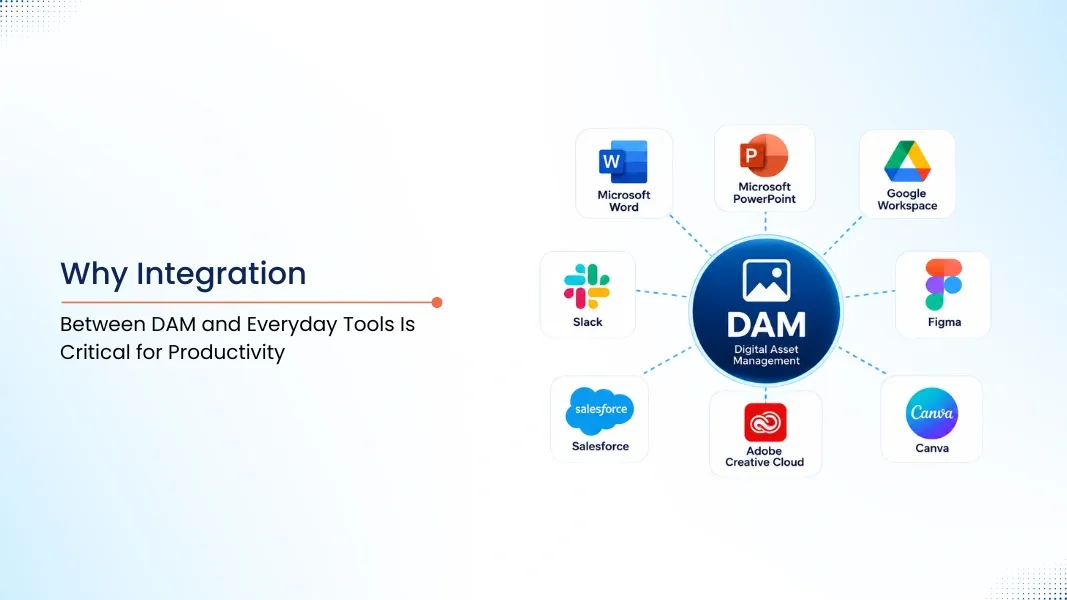
Why Integration Between DAM and Everyday Tools Is Critical for Productivity Focus Keyword DAM integration Secondary Keywords Digital asset management efficiency Workflow automation DAM for creative teams Digital asset management integration Target Audience Marketing Managers and Directors, Creative Directors and Designers, Digital Project Managers
There’s a quiet productivity gap in most creative teams. It doesn’t come from lack of skill or motivation, but from the friction that happens between tools. A designer works in Adobe, a marketer drafts in PowerPoint, and a copywriter searches through emails for the right brand graphics. Each tool does its job, but they don’t always connect with each other. And every second spent switching between them takes away from focus and flow. That’s where DAM integration gets helpful. When a Digital Asset Management system blends seamlessly into the tools people already use, work starts to feel smoother, more connected, and surprisingly faster. It’s not about adding another platform to the stack. It’s about making the stack finally work together. The Hidden Gap Between Creation and Control Every organization faces the same tug-of-war. Creative teams need freedom to build, experiment, and publish quickly. Brand managers and IT teams, on the other hand, need structure, compliance, and control. Without integration, these two worlds constantly pull against each other. Someone downloads an old logo because it was easier to grab from their desktop. Another edits an outdated file because the shared drive wasn’t updated. It does not happen because of carelessness; it’s the cost of disconnected tools. When Digital Asset Management efficiency depends on manual uploads and constant coordination, people end up managing files more than creating work. Integration changes that rhythm. It lets tools like Adobe Creative Cloud, Microsoft 365, or Google Workspace pull directly from the DAM. The right version is already there. Metadata travels with the asset. Brand guidelines stay intact without anyone having to double-check. The system becomes invisible, and productivity quietly rises. What Integration Really Means (Beyond Convenience) Integration is often mistaken for convenience, like a shortcut that saves a few clicks. But it’s much deeper than that. At its core, integration means connecting different tools or systems so they work together as one. It allows information, files, and actions to move automatically between platforms without the need for manual effort. For example, when your design software connects directly with a Digital Asset Management (DAM) system, new creatives can automatically sync, get tagged, and become instantly available for use. This connection keeps workflows smooth, reduces errors, and saves time for every team involved. An efficient digital asset management integration transforms how teams operate. Here’s what it really does: Creates a single source of truth: Everyone works from the same approved assets, which reduces version conflicts and rework.
Automates repetitive steps: Uploading, tagging, or resizing assets can be automated through workflow automation with DAM.
Connects creation to distribution: Finished assets flow directly into marketing, web, or social channels without needing manual downloads.
Supports analytics and insight: Integrated systems track asset usage, performance, and engagement across platforms. When these aspects work together, creativity expands. Teams can spend less time finding, fixing, or verifying content and more time actually creating it. The Human Side of Connected Workflows Behind every efficiency improvement is a practical benefit. Integrated systems reduce frustration and enhance productivity. They help people stay in their flow state longer. A designer doesn’t have to leave Photoshop to fetch a logo. A marketer can instantly find the latest campaign banner inside the productivity app. A content manager knows every asset is brand-approved without sending five emails for confirmation. This is DAM for creative teams at its best. It removes invisible friction not just for individuals, but for entire departments. Meetings get shorter because there are fewer mistakes. Feedback loops tighten because everyone sees the same version. Deadlines stop slipping because assets are where they should be, exactly when they’re needed. Integration also nurtures trust. Teams stop blaming tools or each other and start relying on the system. When people see that the DAM works efficiently, they use it more, which further strengthens consistency and performance. Real-World Shifts in Productivity Companies that invest in digital asset management integration with their everyday tools often see significant improvements in productivity and collaboration. Faster project cycles: Campaigns move quickly when assets are embedded directly into design and content platforms.
Stronger brand consistency: No one accidentally uses an outdated logo or off-brand image.
Reduced administrative load: Automated uploads, tagging, and approvals remove the busywork.
Improved collaboration: Teams across regions or agencies can share assets without version confusion. We can take the real-world example of the company, Ansira, which integrated its Acquia DAM with Adobe Creative Cloud tools using the DAM Connector. By using this integration, designers could access approved visuals directly within Illustrator and InDesign, speeding up campaign delivery, reducing errors, and keeping global teams aligned on brand and workflow efficiency. What to Look for in a Well-Integrated DAM Not every system plays well with others. When evaluating or upgrading your DAM integration, these are the capabilities that make the biggest difference: Native integrations: Direct connections with tools like Adobe, Microsoft, Figma, and Slack ensure effortless access to assets.
Open APIs: They allow customization, so IT teams can connect niche or proprietary software.
Automated workflows: Built-in workflow automation helps trigger approvals, send notifications, or archive old versions.
Metadata synchronization: Keeping asset details consistent across systems prevents confusion later.
Real-time updates: Edits made in the DAM should instantly reflect wherever the asset appears. When these capabilities come together, the DAM becomes an active part of the creative workflow. The easiest way to achieve this is through DAM connectors, which link the system directly with everyday tools. These connectors remove the extra steps between creating, managing, and publishing assets, allowing teams to work faster and with fewer interruptions. In essence, they make integration effortless and productivity natural. The Future of Work Is Seamless The more connected tools become, the less people notice them. That’s the ideal state for digital asset management efficiency; when systems operate quietly in the background and teams can stay focused on the work that matters. The future of DAM is about seamless connection. The most productive organizations will be the ones where every creative tool, communication channel, and brand asset flows together naturally. The lines between “creating,” “managing,” and “publishing” will fade, replaced by a single, unified workflow that feels effortless. Integration is what makes that possible. Not because it’s trendy, but because it respects how people actually work; inside their favorite tools, in their own rhythm, without interruption. Final Thought Productivity is about removing what slows people down. DAM integration does exactly that. It lets creativity and control coexist without friction, turning everyday tools into a connected ecosystem. When that happens, the outcome is better work and happier teams; and that’s the kind of productivity every business should aim for.