Enterprise AI vendor selection: choose the option that survives production, not the one with the best demo
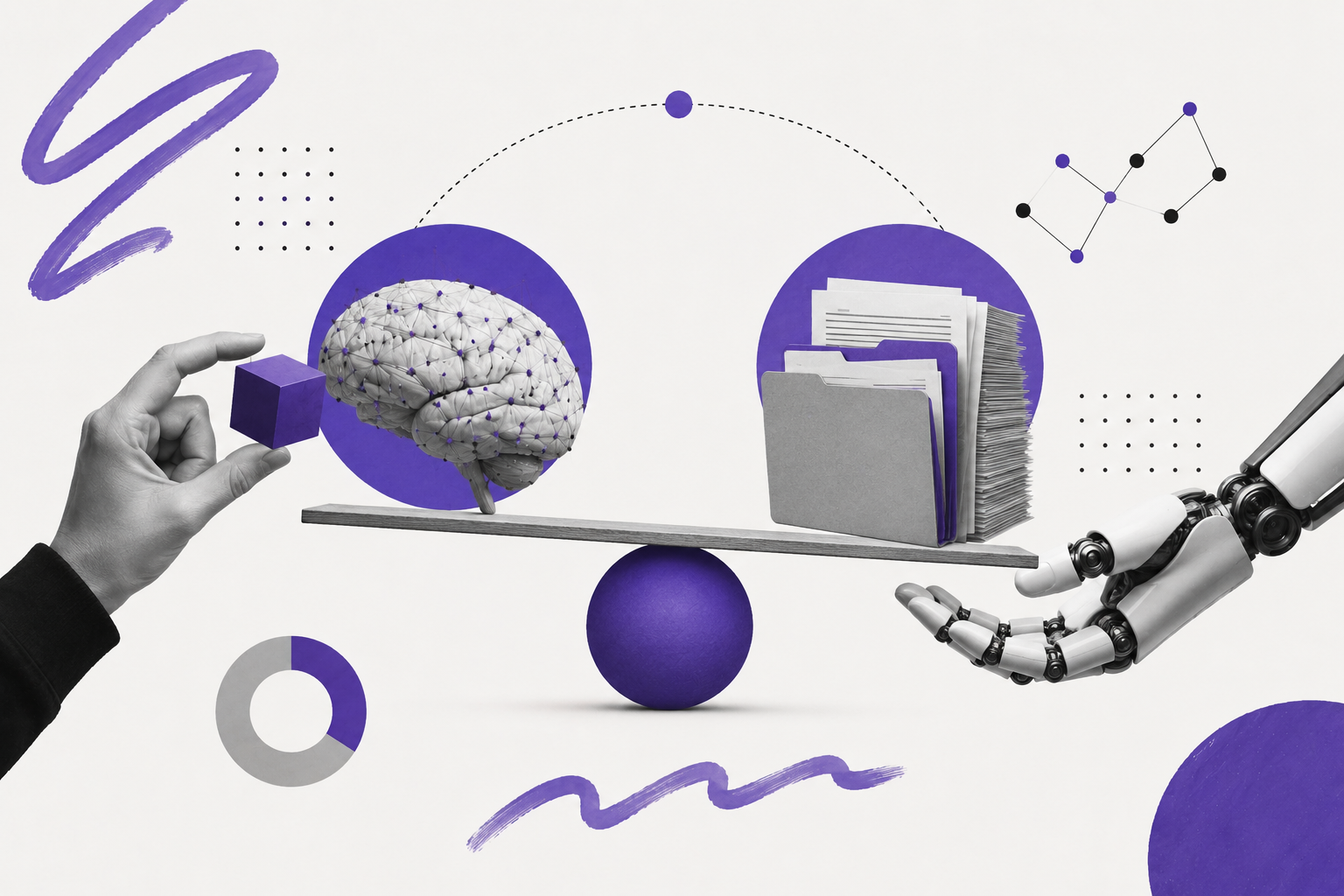
The best enterprise AI vendor is not necessarily the one with the most impressive chatbot, the longest feature list, or the lowest per-token price.
It is the option that can produce a measurable business result using your real data and workflows, while still giving you control over security, permissions, errors, cost, and exit. If you're weighing whether the answer is an off-the-shelf vendor at all, it's worth first reading how to choose an AI development company, since some of what looks like a "vendor decision" is really a build-vs-buy decision in disguise.
That is why enterprise AI vendor selection should begin with two steps:
- Set non-negotiable risk gates before comparing scores.
- Run a narrow 4–6 week proof of concept against the riskiest real workflow.
A demo proves that a system can work under favourable conditions. A proof of concept should test whether it works when data is incomplete, permissions matter, an integration is slow, the AI is uncertain, or a user needs to correct a prior action.
Our practical rule is simple:
Automate certainty. Use AI for ambiguity. Keep humans accountable for consequence.
This rule helps separate work that needs deterministic software controls from work where AI can add genuine value — the same distinction that shows up in RAG vs fine-tuning: how to choose the right approach, where the right architecture depends on how much certainty the task actually needs.
Why enterprise AI vendor demos are not enough
Most AI products look good when they are shown a clean prompt, a small document set, and a happy-path workflow.
Production does not behave like that.
Business data is incomplete. Users have different permissions. Documents go stale. APIs time out. Costs rise with adoption. Someone eventually asks why the system made a recommendation, who approved it, and how to correct it.
We have seen the equivalent problem in regulated e-invoicing workflows through Aierpify, an FBR/PRAL e-invoicing platform for Pakistani businesses. It is not an AI vendor-replacement case study in the narrow sense, but it illustrates the same selection principle: dependable, auditable workflow infrastructure matters more than impressive-looking automation.
The early version of an invoicing integration sounds simple: submit invoice data to an official endpoint and receive a validation response.
The actual production work involves:
- Seller and scenario verification
- Product and tax mapping
- Incomplete or inconsistent source data
- Malformed payloads and unclear external errors
- Server time zones affecting invoice dates
- Correction and cancellation workflows
- Timeouts where it is unclear whether an external system processed the submission
A successful sandbox response is not proof that a workflow is ready for operations. The same is true of an AI demonstration.
Start with hard gates, not a weighted scorecard
A weighted scorecard is useful, but it should not allow a vendor to compensate for a serious control failure with a better user interface or lower price.
Before scoring vendors, define the requirements that are mandatory for your use case.
For a customer-facing, financially consequential, regulated, or sensitive-data workflow, common hard gates include:
- Clear data ownership and permitted data use
- Tenant isolation and document-level access controls
- Role-based permissions
- Audit logs that allow events and decisions to be reconstructed — see our take on audit trails, role-based access control, and approval workflows for how these controls should surface to end users
- Retention, deletion, and export controls
- A workable data and configuration exit path
- The ability to test with representative data
- Human approval for consequential actions
- Clear incident, support, and recovery responsibilities
If a vendor cannot meet an essential requirement, it should be removed from consideration. Do not let it "win" because it scored well on convenience.
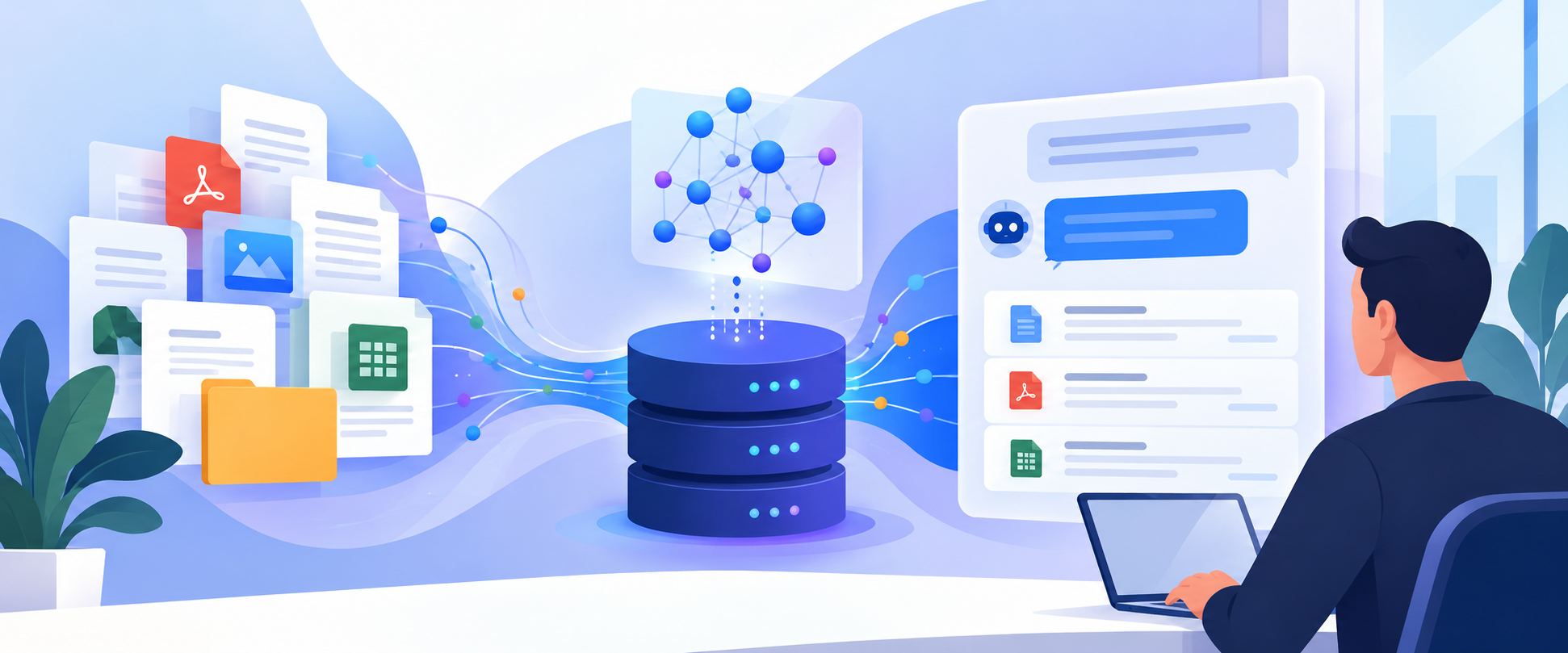
This matters particularly in AI procurement because the apparent product may be only one layer of the final system. Your actual solution may also depend on API integration services, document processing, vector storage, embeddings, prompts, observability, workflow logic, and internal data preparation.
The 4–6 week AI proof of concept: what it should prove
A useful AI proof of concept is not a miniature version of the whole programme.
It is a controlled test of the most important uncertainty.
For some organisations, that uncertainty is answer accuracy against internal policy documents. For others, it is whether an AI workflow can classify inbound requests without exposing confidential data. For a compliance process, it may be whether AI suggestions can reduce manual review without weakening traceability or approval controls.
A practical PoC can fit into four to six weeks when the scope is narrow and decision criteria are agreed before the work starts.
Week 1: define the decision and baseline
Start with one business problem and one decision you need to make after the PoC.
For example:
- Can an internal assistant retrieve the correct policy guidance from approved documents?
- Can AI extract draft fields from incoming documents while keeping users responsible for approval?
- Can an AI routing workflow reduce time spent triaging unstructured requests?
- Can the vendor integrate safely with our identity, document, CRM, ERP, or ticketing systems? This is also a good moment to weigh a vendor platform against custom software development for enterprise workflows if none of the off-the-shelf options fit cleanly.
Measure the current process first. This does not need to be perfect, but it needs to be honest.
Useful baseline measures include:
- Time spent per task
- Manual correction or rework volume
- Escalation rate
- Search or retrieval time
- Existing error categories
- Cost of the current process
- Ability to reconstruct who did what and why
Weeks 2–3: test representative data and failure modes
Avoid polished dummy data. Test the conditions the business actually faces.
For a document assistant, include incomplete, outdated, conflicting, and permission-restricted documents. For an automation workflow, include unclear requests, missing data, repeated submissions, API failures, and exceptions that need a human decision.
At this stage, test the situations that a sales demo usually avoids:
- A user attempts to access another team's or tenant's documents
- A key source document is missing or stale
- The system is not confident enough to answer
- An external API is slow or temporarily unavailable
- A request times out after partial processing
- A user corrects a prior action
- The same event arrives twice
- Usage rises enough to expose cost behaviour
In Aierpify-style compliance workflows, one of the most important lessons is that uncertainty about submission state is itself a risk. If an external API times out, blindly retrying can create duplicates. Marking it as failed may cause a user to issue another record unnecessarily.
The safer design is to preserve the attempt, show a visible status, reconcile where appropriate, and use controlled, idempotent retries.
That is the mindset to bring to AI vendor evaluation too: ask how the product behaves when it does not know, cannot connect, or should not act.
Weeks 4–5: evaluate users, controls, and operating cost
Bring in the people who will actually work with the system.
For a finance, compliance, or operational workflow, that often means both the person doing the daily task and the person accountable for correcting or approving exceptions. A PoC can look successful to a project team but fail in practice if the responsible business user cannot understand the system's status or fix an error.
Test whether users can:
- See the source or evidence behind an answer
- Recognise when AI output is uncertain
- Correct an inaccurate draft
- Escalate an exception
- Understand what action was taken
- Access only what their role permits
- Reconstruct an earlier decision from the audit trail
At the same time, model realistic cost. A low model price does not tell you the total operating cost.
Include the cost of document preparation, embeddings, vector storage, API requests, observability, support, integration maintenance, prompt or workflow changes, and internal ownership. This is the same total-cost thinking behind how much it costs to build an AI/ML app — sticker price and total operating cost are rarely the same number.
Week 6: make a decision with evidence
At the end of the PoC, do not ask whether stakeholders "liked" the tool.
Ask whether it met the pre-agreed success criteria without failing any hard gate.
A strong conclusion may be:
- Proceed with a controlled production rollout
- Proceed only for a narrower use case
- Keep deterministic automation and remove AI from the risky step
- Run a second PoC focused on a remaining integration or security uncertainty
- Reject the vendor or pause the initiative
Rejecting a tool after a well-designed PoC is not a failure. It is a cheaper outcome than rolling out an unsuitable platform.
A risk-weighted AI vendor scorecard
Once vendors pass the non-negotiable gates, use a weighted scorecard to compare them consistently.
For customer-facing, financially consequential, or regulated workflows, we recommend the following starting point:
| Criterion | Weight | What to test |
|---|---|---|
| Security, privacy, tenant isolation, and data ownership | 20% | Access controls, data-use terms, retention, deletion, isolation tests |
| Reliability, error handling, uptime, and recovery | 15% | Timeouts, retry logic, failure visibility, service support |
| Integration fit and implementation feasibility | 15% | Identity, APIs, data quality, existing systems, implementation effort |
| Accuracy, groundedness, and evaluation results | 15% | Real tasks, source citations, uncertainty handling, error patterns |
| Auditability, permissions, and human approval controls | 15% | Logs, RBAC, approvals, correction paths, event reconstruction |
| Total cost and cost predictability | 10% | Usage growth, platform fees, support, infrastructure, implementation |
| Vendor viability, support, customisation, and exit options | 10% | SLAs, roadmap, exportability, contract terms, migration effort |
Score each criterion on the same scale, such as 1 to 5. Record the evidence supporting the score, not just a stakeholder opinion.
The most important part is not the arithmetic. It is the discipline of making evidence visible.
How scoring should change by AI use case
Not every use case deserves the same weighting.
A low-risk internal assistant may prioritise usability, speed of deployment, and cost. A customer-facing assistant should place more weight on grounded answers, escalation, monitoring, and trust. A regulated process needs stronger emphasis on permissions, traceability, deterministic validation, and accountable human approval — the same terrain covered by ERP and accounting software integration work, where a wrong answer has a direct financial consequence.
| Use case | Criteria that should rise in importance |
|---|---|
| Internal knowledge assistant | Usability, retrieval quality, source freshness, cost |
| Customer support assistant | Answer quality, escalation, monitoring, brand risk, privacy |
| Document extraction or classification | Accuracy, confidence thresholds, human review, data quality |
| AI workflow automation | Integration reliability, exception handling, idempotency, audit logs |
| Finance, legal, tax, or compliance workflow | Permissions, traceability, deterministic controls, approval, correction paths |
The key question is not, "How intelligent is the AI?" It is, "What is the consequence when it is wrong?"
Separate deterministic work from AI work
Many AI automation projects fail because the business tries to apply probabilistic language generation to a problem that needs deterministic controls.
In an invoicing or compliance workflow, calculations, required fields, tax structures, duplicate prevention, submission states, user permissions, and official API payloads are software-validation problems. They should be controlled by rules, not generated text.
AI can help when input is ambiguous or unstructured — this is where AI agent development earns its place rather than replacing deterministic logic. Examples include:
- Suggesting a likely HS/PCT classification from a product description
- Extracting draft values from a document
- Highlighting missing information
- Summarising a long record
- Searching internal guidance
- Interpreting free-text emails and routing them to the right workflow
But the AI output should remain reviewable before it becomes a legal, financial, contractual, or irreversible business record.
A system should not quietly approve a payment, submit a compliance document, change tax treatment, or disclose confidential information simply because the model returned a plausible response.
Questions to ask every enterprise AI vendor
Ask these questions before contract signature, not after implementation begins.
Security, privacy, and governance
- Where is our data processed and stored?
- Is customer data used for model training or product improvement?
- How are tenants, users, and individual documents isolated?
- Can we enforce role-based and document-level permissions?
- What logging is available, and how long is it retained?
- Can we delete data and verify deletion?
- What controls exist for sensitive or regulated information?
Ground these questions against an external baseline rather than taking a vendor's word for it: AI risk-management guidance from bodies like NIST, your relevant data-protection regulator's guidance, and security assurance documentation such as SOC 2 or ISO/IEC 27001 reports are the standard reference points here.
Reliability and integration
- How does the system behave when an integration times out?
- Can we prevent duplicate actions or duplicate submissions?
- Are failure states visible and recoverable?
- Can we export logs and correlate events with our own systems?
- What APIs, webhooks, identity systems, and data sources are supported?
- What happens if a third-party model or dependency is unavailable?
For anything hosted on a major cloud platform, the vendor's own claims should be checked against that provider's official documentation on data processing, residency, and enterprise controls.
Accuracy and evaluation
- Will the vendor test against representative data and real tasks?
- Can the system cite its source documents or evidence?
- How does it handle uncertainty or missing information?
- Can we set confidence thresholds and require human review?
- How are evaluation datasets maintained as source material changes?
- Can we inspect error patterns, not just average accuracy?
Commercial terms and exit
- Is pricing based on seats, tokens, API calls, automation runs, storage, or some combination?
- What happens to costs when usage grows?
- Who owns prompts, workflow rules, evaluation datasets, and custom code?
- Can we export data and configurations in a usable format?
- Can we switch models or vendors without rebuilding the workflow?
- What support, maintenance, SLAs, and customisation are included?
The AI vendor-selection mistake to avoid
The most common mistake is treating a good demo or successful sandbox response as proof of operational readiness.
A demonstration tells you that something can work. It does not tell you whether the system can survive incomplete data, a permission mistake, a stale source document, an API timeout, a user correction, or a serious audit question.
Insist on failure-mode testing early.
At minimum, test:
- Invalid and incomplete source data
- Permission-denied access attempts
- Missing and stale documents
- Unsupported or low-confidence AI responses
- API timeout and retry behaviour
- Duplicate action protection
- Cost under realistic usage
- Data export and vendor-exit steps
- Human escalation and approval paths
The rejected approach is not AI. It is automation without a credible answer for uncertainty, error, and accountability.
What a good AI vendor decision looks like
A good decision is not a platform purchase. It is an evidence-backed operating choice.
You should be able to explain:
- The business outcome you are trying to improve
- The workflow and data that were tested
- The baseline against which results were judged
- The risks that were treated as deal-breakers
- The controls required before production use
- The total expected cost, including implementation and maintenance
- The human owner of exceptions and consequential decisions
- How the business can leave the vendor if needed
That is what makes an AI initiative easier to defend to technical, operational, financial, procurement, and compliance stakeholders. If you're not sure where your own organisation stands on this yet, an AI readiness assessment before a full PoC can surface most of these gaps early, at far lower cost than finding them mid-rollout.
FAQ
How long should an enterprise AI proof of concept take?
A focused AI PoC can often run for four to six weeks. The right duration depends on access to representative data, integration complexity, required security review, and the number of user groups involved. Keep the scope narrow: prove or disprove the riskiest assumption before expanding.
What should be included in an AI vendor scorecard?
At minimum, score security and privacy, reliability, integration fit, accuracy on representative data, auditability, human approval controls, total cost, vendor support, and exit options. Use hard gates first so serious control gaps cannot be offset by attractive features.
What is the biggest risk in enterprise AI procurement?
The biggest risk is buying a tool based on a controlled demo without testing real operating conditions. Common hidden issues include weak permissions, poor source-data quality, stale retrieval, unclear failure states, unpredictable usage costs, lock-in, and missing audit trails.
Should AI make decisions in finance, legal, tax, or compliance workflows?
AI can assist with interpretation, drafting, extraction, classification, and search. Deterministic validation should handle required rules and calculations. Human approval should remain in place where an error could create legal, financial, compliance, or customer harm.
How do you measure an AI PoC?
Measure the business outcome that matters to the workflow: time saved, rework reduced, retrieval speed, corrected records, escalation rate, and quality on representative tasks. Also measure control performance: permission failures, unsupported answers, exception handling, audit completeness, and cost under realistic use.
How can we avoid AI vendor lock-in?
Ask for usable data and configuration export, ownership clarity for custom prompts and workflow logic, documented integrations, and an architecture that can swap models or providers where practical. Run an exit test during evaluation instead of treating it as a contract footnote.