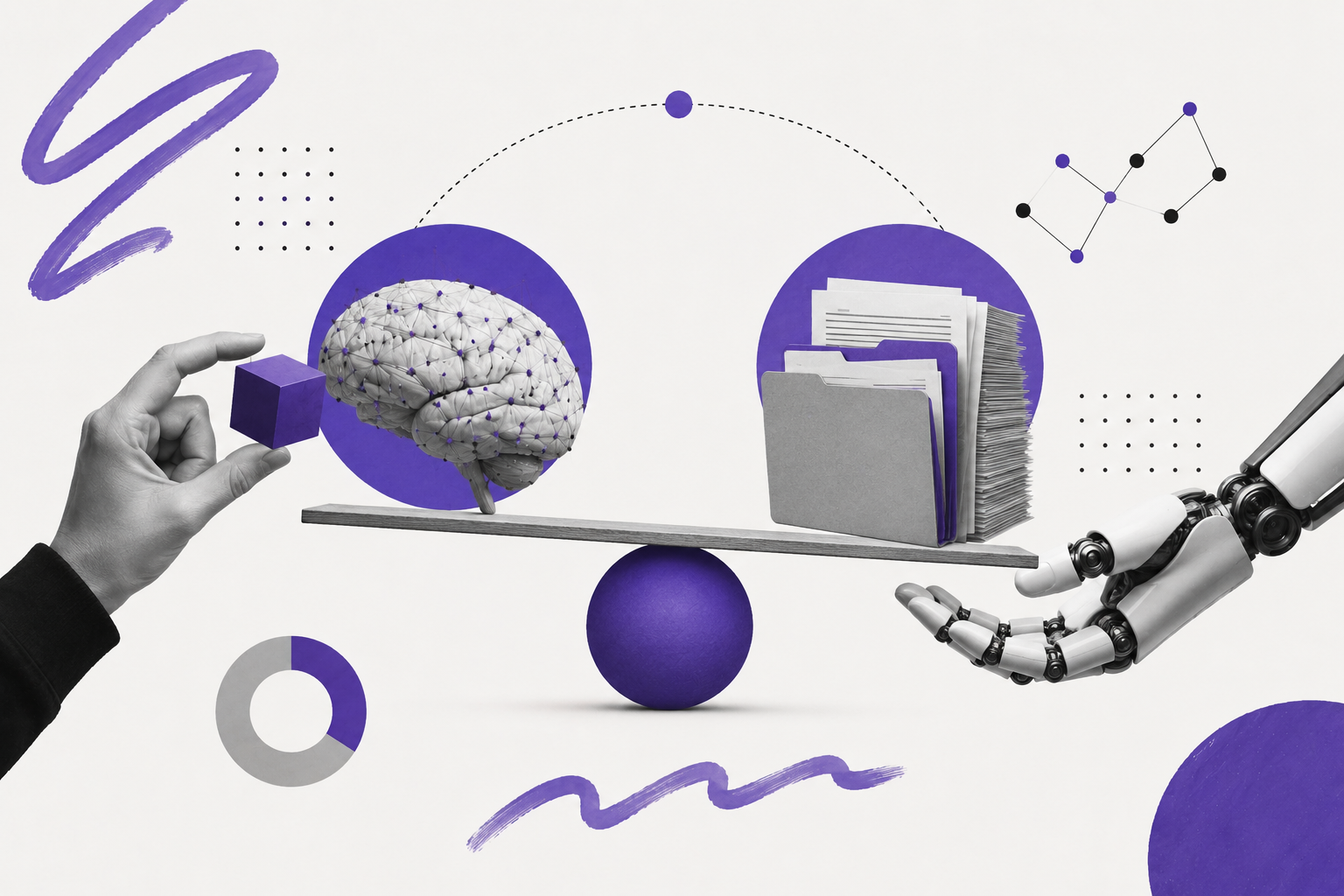
Once a topic for science fiction authors, AI has emerged to influence nearly all aspects of our lives and businesses. Now, another major evolution is underway in the world of technology: autonomous Artificial Intelligence Software — self-aware, learning AI that makes decisions and accomplishes complex tasks without significant human guidance. Rather than just an automation solution built around a predefined set of rules, autonomous AI systems adapt and improve in response to new conditions and circumstances.
As businesses look for smarter ways to boost operational efficiency, cut costs, and speed up innovation, investing in Artificial Intelligence Software is emerging as a shrewd decision for almost every industry. Whether you're in healthcare, finance, manufacturing, or retail, autonomous AI is set to revolutionize the way business gets done. Let's take a closer look at autonomous AI software, how it functions, what it entails, and what the future holds for this game-changing technology.
What Is Autonomous Artificial Intelligence Software?
Autonomous Artificial Intelligence Software is AI software that can independently assess data, determine actions, and perform them with limited human oversight. Traditional AI systems typically help humans by giving advice and executing tedious functions; autonomous systems perform tasks based on that advice, within specific constraints and goals.
These intelligent systems rely on machine learning, Natural Language Processing (NLP), computer vision, and reinforcement learning to improve over time — identifying trends and predicting better outcomes as they process more data.
Across the wide range of use cases for autonomous AI, a few core characteristics stand out:
- Self-learning through data analysis
- Goal-oriented decision-making
- Real-time adaptability
- Continuous performance improvement
- Minimal human intervention
How Autonomous AI Software Works
The key strength of autonomous AI software is its ability to converge multiple AI technologies into a well-defined, smooth, decision-making pipeline.
It typically begins with data acquisition, where the system collects information from sensors, user behavior, databases, or network-enabled devices. From there, patterns are extracted and predictions are generated by an AI model.
NLP allows AI to understand and act on the nuances of human language, while computer vision enables systems to 'see' images and video. Reinforcement learning allows the system to learn from the outcomes of its own actions.
In a streamlined view, the pipeline looks like this: Data Collection → Learning → Decision-Making → Action → Feedback → Continuous Improvement.
This loop is what allows autonomous AI systems to keep improving over time, generating more precise and faster outputs with every cycle.
Why Autonomous AI Is Growing So Quickly
Several forces are driving the rapid rise of autonomous AI. Businesses now produce enormous volumes of data, and these large data pools provide the raw material needed to train machine learning models. Advanced GPUs are also making computationally complex models far more feasible to run at scale, including in the cloud.
The growing push for digital transformation has further encouraged organizations to adopt AI software solutions. Automating complex processes with AI enhances customer experience and lowers the cost of doing business — and with more advanced models available, autonomous systems can now take on increasingly complex tasks.
Benefits of Autonomous Artificial Intelligence Software
Organizations of any size stand to benefit significantly from integrating autonomous AI into their infrastructure.
- Increased Productivity — automating tedious, time-intensive activities frees employees to focus on high-level work that demands creative insight and strategic thinking.
- Reduced Operational Costs — autonomous solutions cut down on manual input, prevent human error, and make better use of resources, lowering overall operating costs.
- Faster Decision-Making — AI processes huge amounts of data in seconds, helping organizations adapt quickly to changing markets and customer needs.
- 24/7 Operations — unlike human teams, autonomous systems don't need rest, enabling round-the-clock service and efficiency gains.
- Personalized Customer Experiences — AI can analyze customer behavior to tailor recommendations, advertisements, and support in real time.
- Improved Accuracy — AI-driven decision-making helps eliminate human error in areas like data analysis, fraud monitoring, and inspection.
Real-World Applications Across Industries
There is almost no field of human endeavor left untouched by autonomous AI.
- Healthcare — autonomous medical imaging analysis, patient monitoring, drug development, and personalized treatment plans, along with faster decision support in critical care.
- Finance — fraud detection, credit risk assessment, automated investment trading, and real-time compliance monitoring within banks.
- Manufacturing — self-navigating robots, predictive maintenance, and AI-enabled quality control to boost productivity and reduce costly downtime.
- Retail — smarter inventory management, demand forecasting, personalized shopping experiences, and automated pricing strategies.
- Logistics — automated warehouse picking and dispatch, intelligent delivery routing, precise shipment tracking, and proactive demand prediction.
- Customer Service — AI assistants and intelligent chatbots that automate queries, cut response times, and improve customer satisfaction.
Challenges and Risks
Autonomous AI brings substantial benefits, but it also presents real challenges.
- Data Privacy — AI relies on large volumes of data to learn, and without strong data protection policies, companies risk exposing customers' personal information.
- Bias — biased training data can make AI decisions unfair or inaccurate, requiring developers to continually monitor and adjust models for fairness and transparency.
- Explainability — many advanced AI models behave as a 'black box,' making it unclear how decisions are reached — a serious concern in regulated sectors like healthcare and finance.
- Governance — organizations need to maintain human oversight of autonomous systems to ensure they operate responsibly.
Autonomous AI vs Traditional AI
While both approaches rely on machine learning and big data analytics, they accomplish very different things. Traditional AI mainly assists human decision-making by offering advice, while autonomous AI can take action independently, respond to novel circumstances, and continue to develop on its own.
This shift 2014 from AI as a tool the user directs, to AI that operates with full autonomy marks one of the biggest leaps in the current state of Artificial Intelligence Software development.
What's Next for Autonomous Artificial Intelligence Software?
The future of autonomous AI looks bright. AI agents capable of completing entire business processes are emerging everywhere, and multi-agent frameworks are enabling different models to work together toward a common goal.
Companies are also beginning to connect generative AI to autonomous capabilities, producing smart assistants that can plan, reason, and carry out entire projects.
Edge AI is becoming increasingly viable, allowing AI systems and the infrastructure that supports them to run directly on devices — computers, mobile phones, or robots — rather than relying solely on a centralized data center. This reduces the need to send large volumes of data to the cloud for analysis, cutting response times, strengthening privacy, and enabling real-time decisions.
At the same time, governments and industry leaders are working on AI governance frameworks that promote transparency, accountability, and responsible innovation.
Rather than replacing humans across every task, the focus going forward will be on human-AI collaboration. Workers will increasingly rely on autonomous systems to handle repetitive work, freeing people to focus on creativity, decision-making, and ethics.
Conclusion
Autonomous Artificial Intelligence Software represents the cutting edge of digital technology, with the potential to move organizations forward through greater efficiency, productivity, and innovation — powered by continuous learning, decision-making, and system improvement.
Investing in dependable AI software will only become more critical as companies advance their digital transformation. Challenges around data privacy and ethics remain, but with proper implementation and appropriate human oversight, the results can be truly transformative.
Autonomous AI isn't just changing how technology works — it's changing how businesses operate, how customers interact with brands, and how the world's leading industries will innovate. Businesses that capitalize on these trends today will have a head start in a future driven by intelligence and automation.