AI did not kill off-page SEO. It exposed weak off-page SEO.
Off-page SEO used to be explained as link building: find websites, get backlinks, improve rankings. That was never the whole story, but it was easy to believe when sheer volume could move a site quickly.
AI has changed the equation. Guest posts, outreach emails, directory descriptions, social posts, and even whole websites can now be produced at industrial scale. The web is filling with content and links that look acceptable on the surface yet carry little real trust. The old volume-first approach is therefore less defensible, less effective, and often more risky.
The question is no longer, “How can I get more backlinks?” It is, “What evidence would make real people, search engines, and AI answer engines regard this business as credible enough to recommend?” That is the future of off-page SEO.
Generic guest posts, broad directory submissions, templated outreach, and high-DR placements on irrelevant sites can still create a report full of links. But when AI can create the same assets faster than any human team, those tactics stop being a meaningful competitive advantage. A generic guest post with no original experience, identifiable expert, relevant audience, or editorial purpose is not authority. It is a link placement wearing an article as a disguise.
Google says its generative search features remain rooted in core ranking and quality systems. Its spam policies also prohibit link schemes and scaled, low-value content built mainly to manipulate rankings. The practical conclusion is simple: build useful, verifiable evidence rather than shortcuts.
- Genuine customer reviews and community recommendations
- Expert commentary and original case studies
- Consistent business information on credible platforms
- Relevant media, partnership, and industry mentions
- Useful products, tools, data, documentation, and real customer outcomes
A backlink is not automatically a valuable signal
I evaluate off-page opportunities with a simple framework: the R.E.A.L. Signal Test.
Relevance asks whether the source is genuinely connected to the business’s industry, location, or customer problem. Editorial integrity asks whether the mention would still exist without payment or a reciprocal-link arrangement. Audience fit asks whether the people who encounter the placement could realistically become customers, partners, or influential referrers. Legitimacy asks whether the source behaves like a real, trusted entity rather than a website designed mainly to sell links.
SEO metrics can help with initial research, but they should not make the decision. Domain Authority and Domain Rating are third-party estimates, not Google’s judgement. A smaller local publication, respected supplier, or niche community can be more valuable than a high-DR site with no relationship to the customer you want to reach.
A real publication normally has identifiable authors or editors, original work, a consistent topical focus, a visible audience, and natural linking behaviour. A link-selling site often reveals itself through unrelated topics, thin AI-style posts, vague author profiles, excessive commercial outbound links, and “write for us” pages that clearly exist to sell placements. If you are researching contributor opportunities, read our guide on finding websites that say write for us, but judge every prospect by relevance and editorial quality, not the presence of a submission page.
My practical rule is simple: if a high DR is the only reason to pursue an opportunity, I pass.
Brand mentions can matter even without a link
An unlinked mention is not worthless merely because it does not pass traditional link equity. When a respected local source, expert, community, or customer recommends a business by name, it can drive qualified referral traffic, increase branded searches, influence buying decisions, and make the business easier to verify across the web. Those are valuable outcomes even when no hyperlink is present.
This matters in AI search too. Google’s AI features retrieve and link to pages from its Search index, while ChatGPT Search incorporates web information and gives users source links. Being understandable, accurate, and independently referenced can expand discovery beyond the familiar blue-link result. This is not a licence to buy artificial mentions everywhere; normal SEO fundamentals still apply.
What makes a business worth mentioning?
A brand earns an off-page mention by giving people something real to reference. “We offer quality service” is not a reason for a journalist, customer, partner, or community to talk about a business. A clear result, useful product, distinct opinion, local proof, or original experience is.
For a local service business, this might be before-and-after work, verified reviews, neighbourhood knowledge, a useful pickup model, responsive service, or a partnership that genuinely helps residents. For a software business, it might be a customer case study, practical free tool, original data, technical documentation, new integration, or founder insight earned through building the product.
My test is simple: would this still be worth sharing if no backlink were involved? If the answer is no, build the proof first; promote the proof second.
What our Dubai laundry work taught us
For a local laundry business in Dubai, the aim was not link volume. It was to help the business become easier to verify across the web and more relevant to people searching locally for laundry and pickup services.
We supported a small content base and keyword clusters with relevant social profiles, real project and case-study references, and credible previous-work placements. Visibility and leads improved, although I do not have a clean, publishable ranking or traffic figure I can responsibly quote.
The lesson was more valuable than a vanity metric: a modest number of relevant mentions and links worked better than chasing a large quantity of generic backlinks. But the off-page effort worked because the site could support it. Real images, clear service information, mobile usability, a suitable regional server/CDN setup, and less visual clutter gave visitors confidence once they arrived. Links can earn attention; they cannot repair a confusing offer.
Build authority from zero in the first 90 days
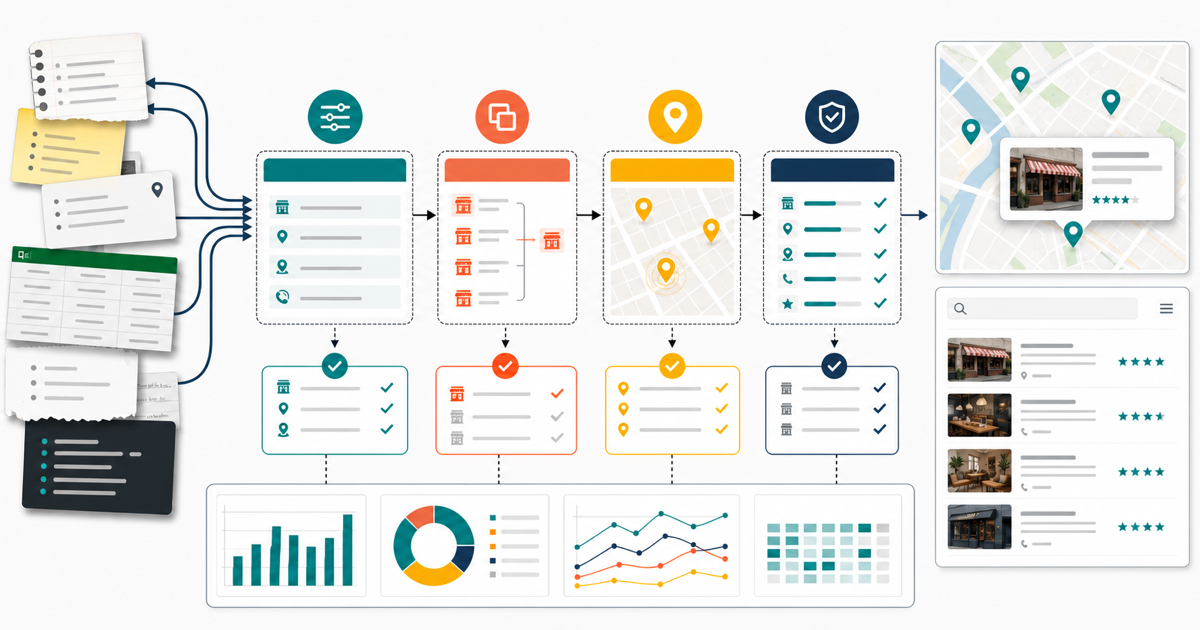
Days 1–30: Make the business easy to verify. Ensure the site is fast, mobile-friendly, and honest about what the company does, whom it serves, where it operates, what makes it credible, and how to contact it. Set up or correct core profiles such as Google Business Profile, LinkedIn, relevant social accounts, industry platforms, and local listings. The business name, address, phone number, services, URLs, imagery, and description should be consistent everywhere.
Days 31–60: Create proof worth sharing: genuine reviews, customer stories, practical guides, founder perspectives, original imagery, product documentation, and pages that answer real customer questions.
Days 61–90: Start focused outreach for meaningful partnerships, expert contributions, relevant listings, niche publications, local coverage, podcasts, or community discussions. Pitch a useful angle, not a link request.
Deliberately postpone bulk guest posting, mass directory submissions, paid link packages, broad reciprocal linking, and generic cold outreach. They are easy to report, but they rarely create durable authority. Teams using AI to support this work should also understand how to build autonomous content pipelines for SEO and AEO without sacrificing editorial judgement or first-hand expertise.
Local off-page SEO: relevance and convenience win
For a service-area business such as a Dubai laundry company, local trust and convenience matter more than broad domain authority. Start with accurate business information across Google Business Profile, maps, service-area listings, useful local directories, and social platforms. Service areas, contact information, hours, categories, photos, and website details must agree.
Reviews are central. A steady flow of specific, honest feedback is more useful than a sudden wave of vague five-star ratings. Then build local relationships. Apartment communities, property managers, relocation services, nearby businesses, neighbourhood groups, and lifestyle publishers can be better opportunities than national sites with much stronger SEO metrics. The strongest local mention is one a nearby person sees and uses to book a pickup.
SaaS and B2B off-page SEO: proof over placements
SaaS and B2B businesses need authority around expertise, product usefulness, and customer outcomes. The most durable off-page assets are customer case studies, integration partnerships, technical documentation, independent reviews, founder-led expertise, relevant communities, podcasts, comparison pages, and credible industry coverage. These assets explain not only that a company exists, but why a buyer should trust it.
For an FBR e-invoicing platform such as Aierpify, useful authority could come from accurate compliance explainers, product documentation, accountant and business-community relationships, customer stories, trusted software listings, and expert commentary on compliance workflows. For a software agency, it may come from real project breakdowns, technical articles, client testimonials, partner work, and founder commentary about problems the team has actually solved.
B2B buyers research deeply. One strong case study or integration can influence several sales conversations. A generic guest post may add a backlink, but it rarely answers a buyer’s real question: “Can these people solve a problem like mine?”
Modern outreach offers value before asking for attention
Outreach starts with fit, not a template. Identify a publisher, partner, journalist, podcast host, or community that already speaks to the business’s likely customers. Then study what it publishes, who it serves, and what it could genuinely find useful.
A worthwhile pitch might offer a practical insight, relevant data, a founder’s experience, a local resident benefit, an expert contribution, a product integration, or a case study with clear lessons. For example, a Dubai laundry company could approach a property manager or residential community with a clear resident benefit: reliable pickup-and-delivery laundry for tenants, backed by a transparent service process and local proof. That is a credible proposal. “Please publish our guest post about laundry tips” is not.
AI can help with prospect research, competitor analysis, link qualification, and a first outreach draft, but it cannot replace judgement about relevance, value, or truthful personalisation. Use AI to reduce research time, not to manufacture authority.
Measure business outcomes, not activity reports
Link count and reported DR are activity metrics, not the main measure of success. Track qualified referral visits, branded-search growth, conversion rate by source, leads and sales conversations, review quality and consistency, visibility for commercial search terms, relevant media or community mentions, and customer acquisition from partnerships.
For AI visibility, periodically test buying, comparison, and problem-solving prompts in ChatGPT, Perplexity, Gemini, and Google’s AI search experiences. Record whether the brand appears, whether the information is accurate, and which independent sources are cited. Give a new campaign at least three months to establish its foundation and around six months to judge meaningful momentum.
The rule worth keeping
Do not build a link you could not justify as a real referral, reputation, or partnership opportunity.
AI has not made authority easier to earn. It has made fake authority easier to produce and easier to spot. The businesses that win will have something real to say, proof they can do what they claim, and a reputation that exists beyond their own website.