What Is a RAG Pipeline?
A RAG (Retrieval-Augmented Generation) pipeline is a system that allows an AI model to search an organization's current documents before generating an answer, making responses more accurate, relevant, and up-to-date.
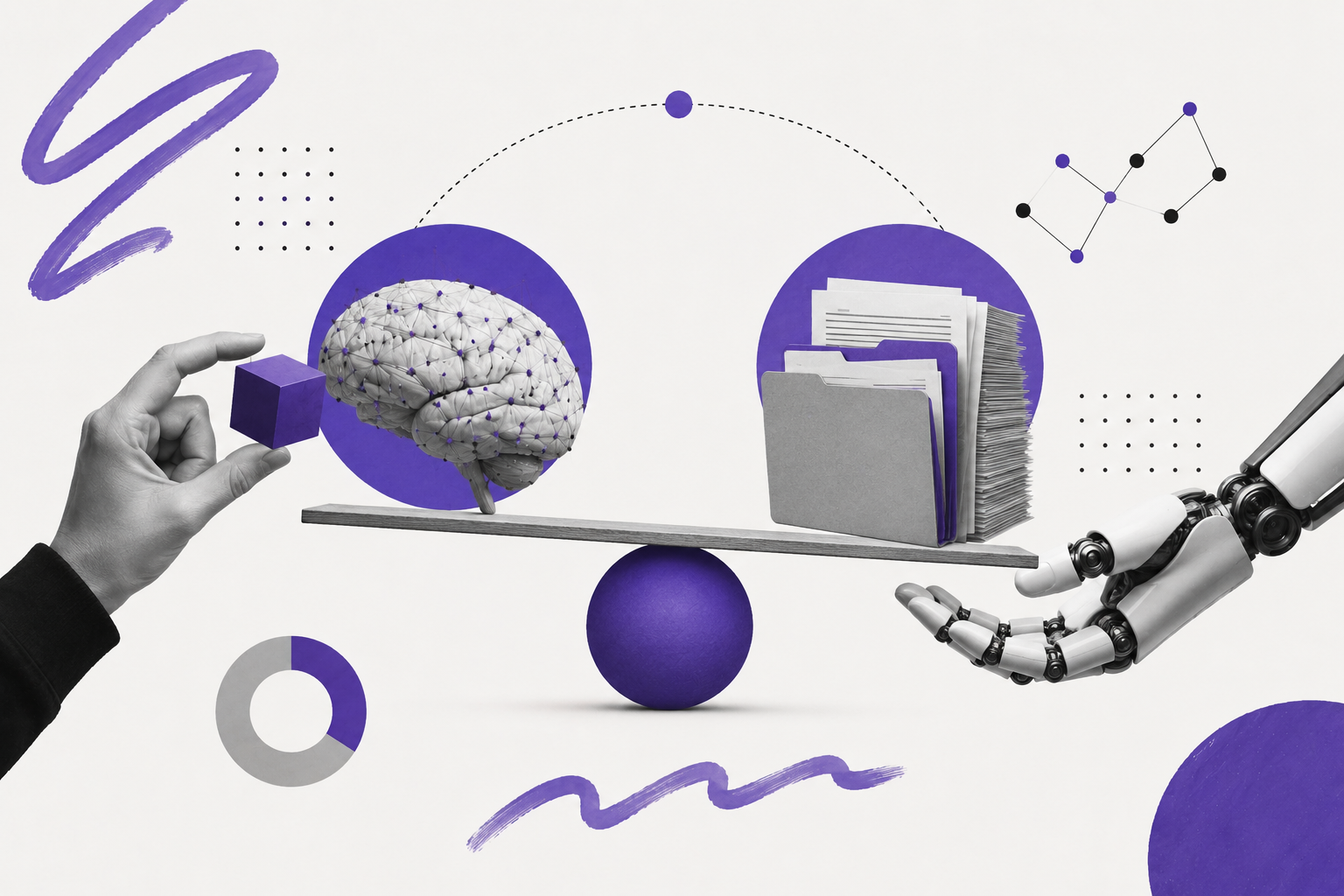
As businesses adopt AI, many discover that large language models do not automatically understand internal knowledge. Company policies, contracts, customer records, compliance documents, and operational procedures exist outside the model's training data. A RAG pipeline bridges this gap by allowing AI to retrieve information from trusted business sources before answering.
For organizations investing in AI initiatives or AI/ML development services, RAG has become one of the most practical approaches for delivering accurate, trustworthy business intelligence.
Why Traditional AI Often Falls Short
Many stakeholders assume that once AI is connected to company documents, it automatically understands everything. In practice, AI systems are only as effective as the information available to them. Without retrieval, a model can generate convincing answers that are outdated, incomplete, or incorrect.
This is particularly problematic in industries such as legal services, finance, healthcare, and compliance where information changes frequently and accuracy is critical.
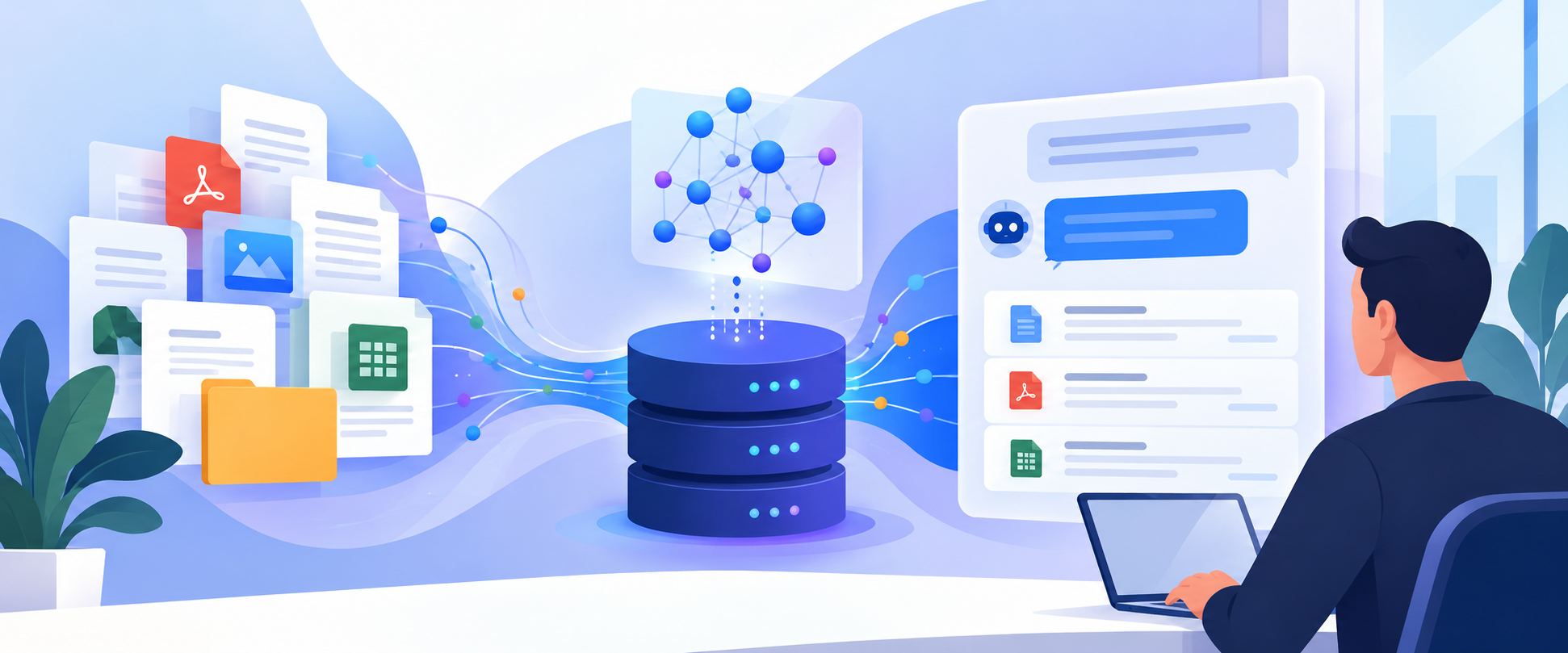
How a RAG Pipeline Works: The Simple 5-Step Process
- Ingest documents and data sources
- Chunk large documents into searchable sections
- Generate embeddings for semantic search
- Retrieve relevant information when users ask questions
- Generate answers using retrieved evidence
Rather than relying solely on pre-trained knowledge, the AI first searches company information and then generates an answer grounded in that information.
Step 1: Ingest
The system gathers information from PDFs, databases, websites, knowledge bases, CRMs, contracts, spreadsheets, and internal documentation.
Step 2: Chunk
Large documents are divided into smaller, meaningful sections. This allows the system to retrieve specific information rather than entire documents.
Step 3: Embed
Each chunk is transformed into a numerical representation known as an embedding. Embeddings help the system understand meaning and context rather than matching keywords alone.
Step 4: Retrieve
When a user asks a question, the system searches for the most relevant chunks. Retrieval quality is often the single biggest factor determining answer quality.
Step 5: Generate
The retrieved information is supplied to the language model, which generates an answer grounded in the evidence.
A Real-World Example from Aierpify
During the development of Aierpify, an FBR e-invoicing and compliance platform, users frequently needed answers about registration requirements, invoice validation rules, and implementation procedures. Traditional search required users to know exactly where information was stored.
A RAG-powered assistant enabled users to ask natural-language questions such as 'How do I register for FBR e-invoicing?' or 'Which invoice fields are mandatory?' The system searched documentation, compliance resources, and implementation guides before generating answers.
The result was faster information discovery, fewer support requests, and improved user confidence because answers were based on documented requirements rather than model assumptions.
Lessons from a 50,000+ Document LegalTech Deployment
One of our largest implementations involved a LegalTech platform containing more than 50,000 documents, including contracts, legal regulations, case files, and client records.
Lawyers needed answers, not documents. Traditional search frequently missed relevant context, while fine-tuning could not keep pace with continuously changing legal information.
After implementing RAG, document search time decreased by approximately 60% to 70%, allowing legal teams to complete research tasks in minutes rather than hours.
The Biggest RAG Mistake Most Companies Make
Most tutorials focus on vector databases, embeddings, and language models. In real-world deployments, document quality causes more failures than AI models.
During implementation, duplicate files, outdated documents, inconsistent formatting, and conflicting information created trust issues. Cleaning and organizing data delivered larger improvements than switching models.
How We Evaluate RAG Quality
We use a three-layer evaluation framework to identify weaknesses in the pipeline.
- Retrieval Quality: Did the correct document get retrieved?
- Context Relevance: Was the correct section retrieved?
- Answer Accuracy: Did the generated answer accurately reflect the source?
RAG vs Fine-Tuning: Which One Should You Choose?
This is one of the most common questions organizations face when evaluating enterprise AI solutions.
Many enterprises ultimately use both approaches. Fine-tuning controls behavior and tone, while RAG determines what information the model can access.
When Should You NOT Use RAG?
RAG may be unnecessary when your knowledge base is small, rarely changes, or can be handled through traditional search. It is also a poor investment when organizations are unwilling to maintain content quality.
If information governance is weak, RAG will simply expose those weaknesses faster.
How Much Does a RAG Pipeline Cost?
The cost of implementing a RAG solution depends on data volume, integrations, security requirements, and deployment complexity.
- Small internal knowledge assistant: $5,000–$10,000
- Department-level implementation: $10,000–$25,000
- Enterprise-wide deployment: $25,000–$50,000+
- Highly regulated industries: $50,000+
The largest cost drivers are typically data preparation, content cleanup, integrations, compliance requirements, and ongoing maintenance.
Deploying RAG in Production
Once a prototype proves value, organizations must focus on scalability, observability, security, and performance. Similar considerations are discussed in our guide on deploying machine learning models in production.
Production-grade RAG systems require continuous monitoring of retrieval quality, content freshness, latency, and user satisfaction.
Final Thoughts
The biggest lesson from real-world deployments is simple: better retrieval often produces larger gains than better models. Organizations that invest in data quality, information architecture, and retrieval performance consistently achieve stronger business outcomes.
If your organization is exploring enterprise AI, conversational search, or ML model engineering services, RAG is often the fastest path toward accurate and trustworthy AI systems.
Book a RAG Assessment
This challenge is becoming increasingly important as businesses adopt AI-powered workflows and answer engines. Our guide on AI Answer Engines Growth explores how retrieval-based systems are reshaping information discovery.
Considering a RAG implementation for your organization? We help businesses evaluate data readiness, retrieval strategies, architecture options, cost estimates, and deployment roadmaps.
Book a RAG Assessment: Contact Bridge Homies to discuss your use case, data sources, and deployment requirements.