Off-Page SEO: The Complete Beginner's Guide (2026)
If you've ever published a great blog post and then wondered why it never shows up on Google, the answer is usually simple: your website doesn't have enough trust yet. That trust doesn't come from your website alone. It comes from what happens outside your website too. That's what Off-Page SEO is all about.
In this guide, we'll break down Off-Page SEO in plain language, no jargon, no fluff, so you actually understand what to do next.
What Is Off-Page SEO?
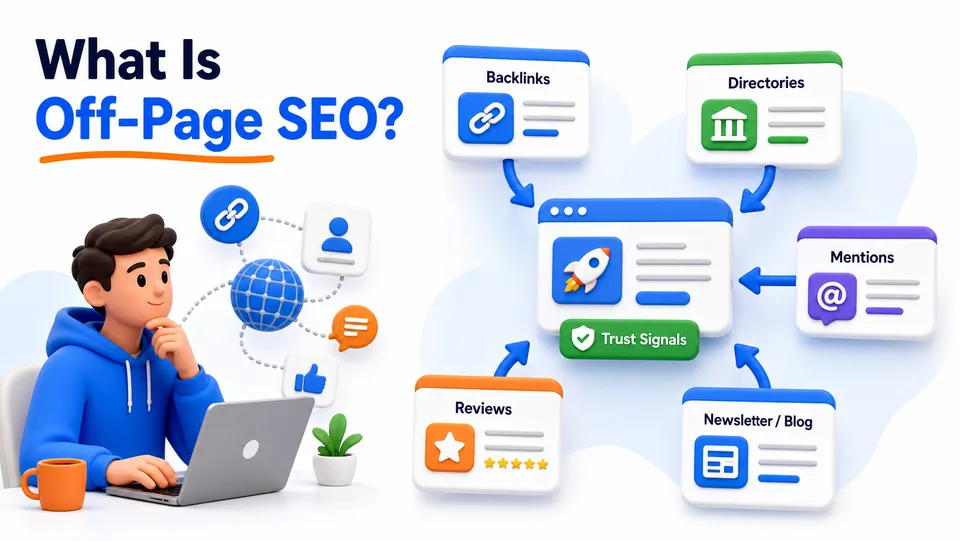
Off-Page SEO means everything you do outside your own website to help it rank higher on search engines. This is different from On-Page SEO, which covers things like your titles, headings, and content that live directly on your pages.
Think of it this way: On-Page SEO is like dressing well for a job interview. Off-Page SEO is like having other respected people vouch for you before you even walk in the room.
Search engines like Google want to show people the most trustworthy, useful websites. Since they can't "trust" a website just because it says nice things about itself, they look at outside signals instead, like how many other websites link to it, mention it, or talk about it.
Why Off-Page SEO Actually Matters
Here's a simple way to think about it. Imagine two restaurants:
- Restaurant A has a beautiful menu and clean tables, but no one has ever reviewed it.
- Restaurant B has a decent menu, but hundreds of people online say it's amazing.
Most people will trust Restaurant B first. Search engines think the same way about websites. Off-page signals tell Google, "Hey, other people trust this site, so you can trust it too."
Without off-page SEO, even the best-written content can stay buried on page 5 of Google, where almost nobody looks.
The Main Types of Off-Page SEO
Off-page SEO covers more than just "getting backlinks." Here are the core pieces:
1. Backlinks
A backlink is simply a link from another website pointing to yours. Backlinks are still one of the strongest ranking signals Google uses, because they act like votes of confidence from other sites.
Not all backlinks are equal though. A link from a well-known, relevant website matters far more than ten links from random, low-quality sites.
2. Guest Posting
Writing an article for another website (like this one) and including a link back to your own site is called guest posting. Done well, it builds both backlinks and real audience trust, since you're reaching a new group of readers who may not know your brand yet.
3. Brand Mentions
Sometimes other websites mention your brand name without linking to you. Google still picks up on these mentions as a trust signal, especially when your brand is talked about consistently across multiple sites.
4. Social Signals
Shares, likes, and comments on social media don't directly boost rankings, but they help your content reach more people, some of whom may link to it from their own websites or blogs. More visibility often leads to more backlinks over time.
5. Influencer and Community Outreach
Getting people with an existing audience, bloggers, YouTubers, or niche community leaders, to mention or link to your content can create a snowball effect of traffic and trust.
6. Local SEO Signals (For Local Businesses)
If you run a local business, things like Google Business Profile listings, customer reviews, and local directory citations count as off-page SEO too. These help you show up in local searches like "best bakery near me."
How to Start Building Off-Page SEO (Step by Step)
You don't need to do everything at once. Start with these steps in order:
Step 1: Create something worth linking to. Before asking anyone to link to your site, make sure you have genuinely useful content, a helpful guide, an original study, a free tool, or a well-researched article.
Step 2: Find relevant websites in your niche. Search for blogs, directories, and communities that already talk about topics related to your business.
Step 3: Reach out with a real reason. Don't just ask for a link. Explain why your content adds value to their readers.
Step 4: Write guest posts on quality sites. Aim for sites with real traffic and engaged readers, not just any website that accepts free content.
Step 5: Get listed in relevant directories. Startup directories, industry listings, and niche resource pages are simple, low-effort ways to earn early backlinks.
Step 6: Track your progress. Use free tools to check how many backlinks you're earning and where they're coming from.
Common Off-Page SEO Mistakes to Avoid
- Buying backlinks in bulk. This might work briefly, but search engines are very good at spotting unnatural link patterns, and the penalty isn't worth the risk.
- Focusing only on quantity. Ten low-quality links won't beat one link from a trusted, relevant website.
- Ignoring relevance. A backlink from a site that has nothing to do with your topic carries far less weight than one from a related niche.
- Doing it once and stopping. Off-page SEO is ongoing. Your competitors are still building links while you're taking a break.
On-Page SEO vs Off-Page SEO: What's the Difference?
| Aspect | On-Page SEO | Off-Page SEO |
|---|---|---|
| Where it happens | On your own website | Outside your website |
| Main goal | Help search engines understand your content | Build trust and authority through outside signals |
| Examples | Titles, headings, internal links, page speed | Backlinks, guest posts, brand mentions |
| Who controls it | You, fully | Partly you, partly others |
Both work together. Great on-page SEO with zero off-page SEO is like having a perfect resume that nobody ever sees.
Final Thoughts
Off-page SEO isn't about chasing shortcuts. It's about consistently earning trust from the wider internet, one genuine backlink, mention, or share at a time. Start small, focus on quality over quantity, and stay consistent. Over time, those outside signals add up into real, lasting search visibility.